
If you’ve ever typed your target keyword into Google and panicked because your site wasn’t on page one, only to check again an hour later and see it sitting at position 4, you already know why rank tracking matters. Google doesn’t show the same results to everyone — your search history, location, and even the device you’re using can change what you see. That’s the core problem a ChatGPT SEO rank tracking tool tries to solve: pulling consistent, unbiased keyword position data instead of relying on guesswork from your own browser.
In this part, we’ll look at how this kind of tool helps you monitor keyword positions accurately, what it actually does for your Google rankings over time, and why real-time SERP updates matter more than most beginners realize. No fluff, just the practical side of how rank tracking works day to day.
ChatGPT SEO Rank Tracking Tool for Accurate Keyword Position Monitoring
Here’s a mistake almost every beginner makes at least once: they search their own keyword on Google, see their site at position 2, and assume that’s the truth for everyone. It isn’t. Google personalizes results based on your search history, your browsing habits, and your IP location. So if you’ve visited your own site fifty times this week, Google might be quietly nudging it higher just for you.
A proper tracking tool strips all of that out. It checks rankings from a neutral, logged-out state, often simulating different locations and devices, so the number you see actually reflects what a real customer in Chicago or Mumbai would find. This matters a lot for local businesses — a dentist in Phoenix doesn’t care how their site ranks in Toronto, they care about the local pack and the map results their actual neighbors see.
There’s also the issue of mobile versus desktop rankings, which frequently differ by several positions for the same keyword. Someone running an online store might rank 3rd on desktop for “leather handbags under $200” but sit at position 11 on mobile, where layout and intent signals shift the results. Without separating these two, you’re working off half the picture, and any optimization decisions you make could be based on data that doesn’t match how most people actually find you.
ChatGPT SEO Rank Tracking Tool to Improve Your Website Google Rankings
Tracking positions is only useful if it leads somewhere. The real value shows up when you start noticing patterns — a keyword that’s been stuck on page 2 for three months, or a blog post that quietly dropped from position 4 to position 14 after a Google core update nobody warned you about. Rankings rarely fall apart all at once; they erode, and most site owners don’t catch it until traffic has already taken a hit.
Take a common scenario: a content team publishes a guide that ranks well for six months, then traffic starts slipping without any obvious reason. Pulling up the historical ranking data shows the page dropped from position 3 to position 9 right after an algorithm update. That’s a clear signal to refresh the content, add updated examples, fix thin sections, and check whether a competitor published something more thorough in the meantime. Without tracking data, that decline would’ve gone unnoticed for weeks, maybe months.
This is also where keyword cannibalization gets caught early. If two pages on your own site are quietly competing for the same search term, ranking data will show both moving up and down in opposite directions, which is usually the first clue something internal needs fixing rather than something Google is doing to you.
ChatGPT SEO Rank Tracking Tool for Real-Time SERP Position Updates
Search results aren’t static, and treating them like they are is a common blind spot. Google runs algorithm updates, sometimes confirmed and sometimes not, and SERPs can shift within hours during competitive periods. Checking rankings once a month might’ve been fine a few years ago, but it leaves you blind to short-term volatility that can actually matter for your business.
Think about an online retailer prepping for Black Friday. Their target keywords might fluctuate daily, sometimes hourly, as competitors launch ad campaigns, update product pages, or get featured in roundup articles. Checking rankings weekly during that window means you’d find out about a ranking drop after the sales event is already over. Real-time or daily tracking gives you the chance to react while it still matters — adjusting a meta title, fixing a slow-loading page, or pushing fresh content while the keyword is still in motion.
The same applies after big algorithm rollouts. When Google confirms a core update, rankings across entire niches can swing for days before settling. Watching positions update in near real time, rather than waiting for a weekly report, helps you tell the difference between a temporary fluctuation and an actual long-term drop worth investigating.
ChatGPT SEO Rank Tracking Tool and Its Benefits for Digital Marketers

Agencies juggle multiple clients, and reporting is usually the part nobody enjoys. Pulling rankings manually for twenty keywords across five clients every week eats hours that could go toward actual strategy work. This is where rank tracking earns its keep — it turns a tedious task into something that runs in the background and just needs review.
A marketer managing a local plumbing client, for example, doesn’t need to log into Google fifteen times a day to check positions. The data sits there, updated, ready to screenshot into a client report. That alone saves a few hours a week, which adds up fast when you’re handling several accounts.
There’s also a trust angle. Clients ask hard questions like “why did my traffic drop last month” or “are we actually moving up for our main keywords.” Having historical position data on hand means you can answer with specifics instead of vague reassurance. Saying “your keyword moved from position 14 to position 8 after we updated the product descriptions” lands a lot better than “things are improving.”
One common mistake newer marketers make is tracking too many keywords without prioritizing the ones that actually drive revenue. Tracking fifty low-intent terms while ignoring the three keywords that bring in actual leads wastes time and clutters reports. A better approach is grouping keywords by intent and business value, then watching the high-priority ones closely while checking the rest less often.
ChatGPT SEO Rank Tracking Tool for Competitor Keyword Analysis
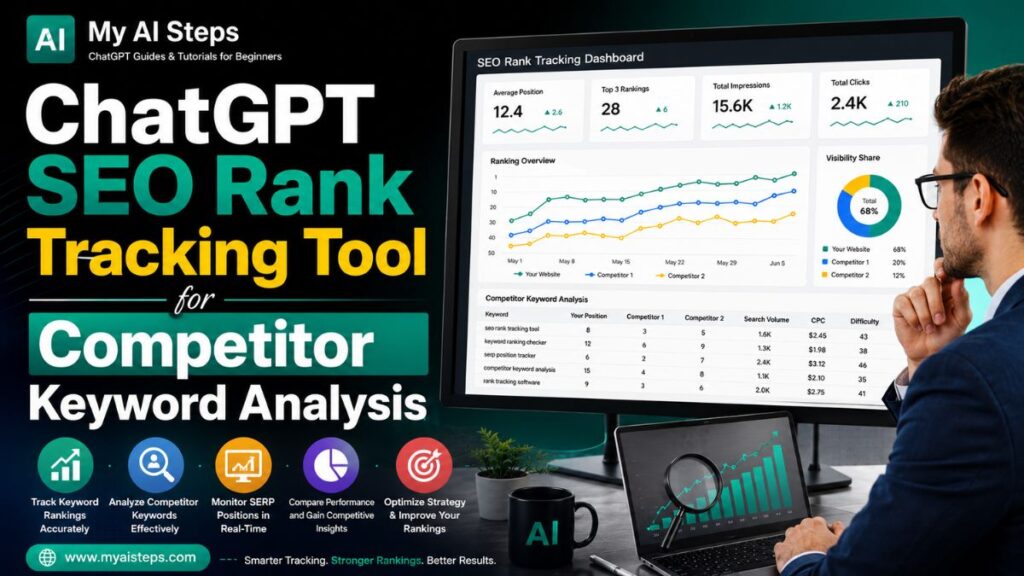
Watching your own rankings only tells half the story. The other half is knowing what’s happening around you — who’s gaining ground, who’s losing it, and why. Competitor analysis through a rank tracking tool usually means comparing your positions against a handful of direct competitors for the same set of keywords, side by side.
Say you run an SEO blog and notice a competitor’s article suddenly jumps from position 9 to position 3 for a keyword you’ve both been targeting. Checking their page often reveals what changed — maybe they added a comparison table, updated statistics, or restructured headings to match search intent better. That’s useful intelligence you wouldn’t get just by staring at your own numbers.
This kind of tracking also helps spot gaps. If a competitor ranks for fifteen keywords related to your topic and you only rank for six, those missing nine are opportunities sitting right there. It’s not about copying their content word for word, but understanding what angle they’re covering that you aren’t.
A practical habit worth building: review competitor movement monthly rather than daily. Daily checking tends to cause overreaction to normal fluctuation, while monthly reviews show real trends — like a competitor steadily climbing across multiple keywords because they’ve been publishing consistently, not because of one lucky post.
ChatGPT SEO Rank Tracking Tool to Track Organic Traffic Performance
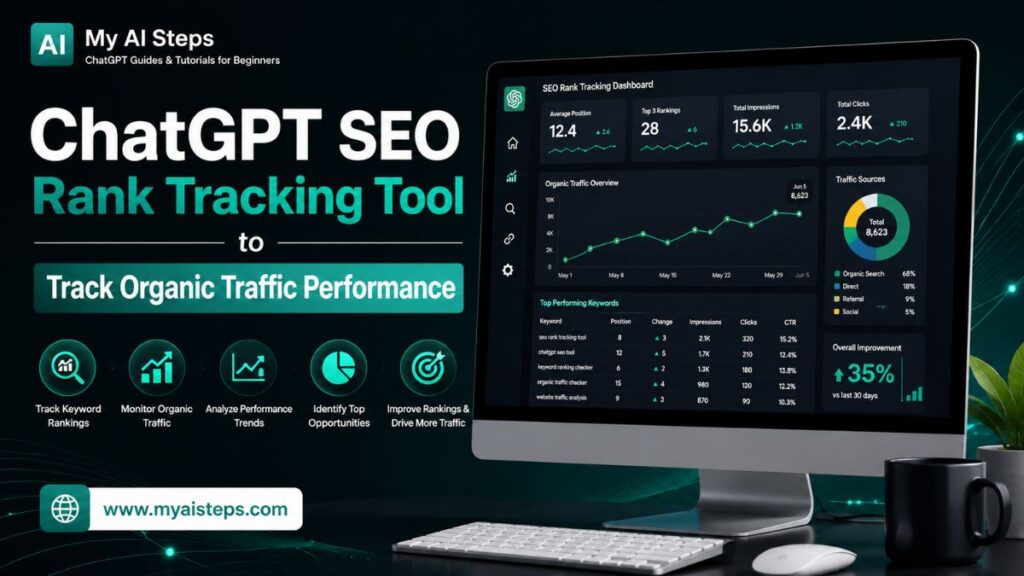
Rankings and traffic are related, but they’re not the same thing, and mixing them up causes confusion. A page can rank in position 5 and still get almost no clicks if the search volume for that keyword is tiny. On the other hand, jumping from position 8 to position 4 on a high-volume keyword can double traffic almost overnight.
This is why pairing rank tracking data with actual traffic numbers matters. Position tells you where you stand in search results; traffic tells you whether that position is translating into real visitors. Click-through rate drops sharply after position 3, so a keyword sitting at position 4 might get a fraction of the clicks compared to the same keyword at position 1, even though both look like “good rankings” on paper.
A useful example: an ecommerce page ranking 2nd for a product keyword but pulling low traffic might have a weak meta title or description that isn’t convincing people to click, even though Google is placing it well. That’s a CTR problem, not a ranking problem, and the fix is different — testing new title tags rather than chasing more backlinks.
Watching how rankings move alongside seasonal traffic patterns also helps. A recipe blog ranking well for “pumpkin pie recipe” will naturally see traffic spike in November regardless of position changes, so reading too much into a single month’s numbers without that context can lead to wrong conclusions.
ChatGPT SEO Rank Tracking Tool for Better SEO Strategy Optimization
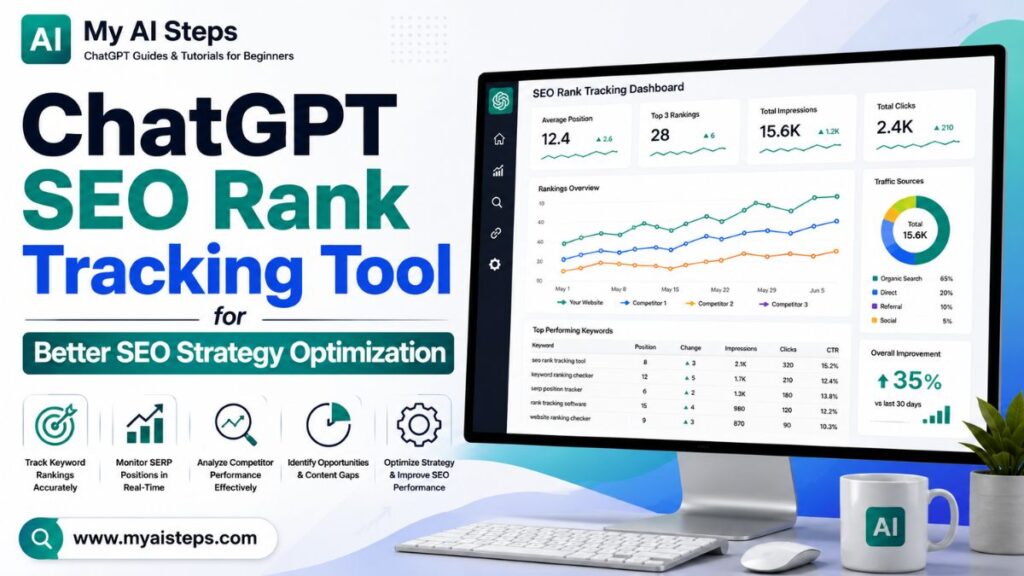
All this tracking data is only valuable if it actually shapes decisions. The biggest difference between sites that improve steadily and sites that stay flat usually comes down to whether someone is reviewing the data regularly and adjusting based on what it shows.
Say a site has twenty pages stuck between positions 11 and 20 — close enough to page one to be worth fixing, but not quite there. This is often called the “striking distance” zone, and it’s usually the fastest place to gain traffic without writing new content. Updating these pages with better internal linking, fresh examples, or more thorough answers tends to move them faster than starting from scratch on a brand-new article.
Tracking also reveals which content types perform best over time. If list-style posts consistently outrank long single-topic guides for your niche, that’s a pattern worth building future content around, not ignoring because it doesn’t match what you originally planned.
A mistake many site owners make is changing strategy too quickly based on short-term dips. Rankings naturally wobble week to week even without any real problem. The smarter move is watching trends over four to six weeks before making major changes, since reacting to every small drop usually causes more harm than the original fluctuation ever would.
ChatGPT SEO Rank Tracking Tool for Small Businesses and Bloggers
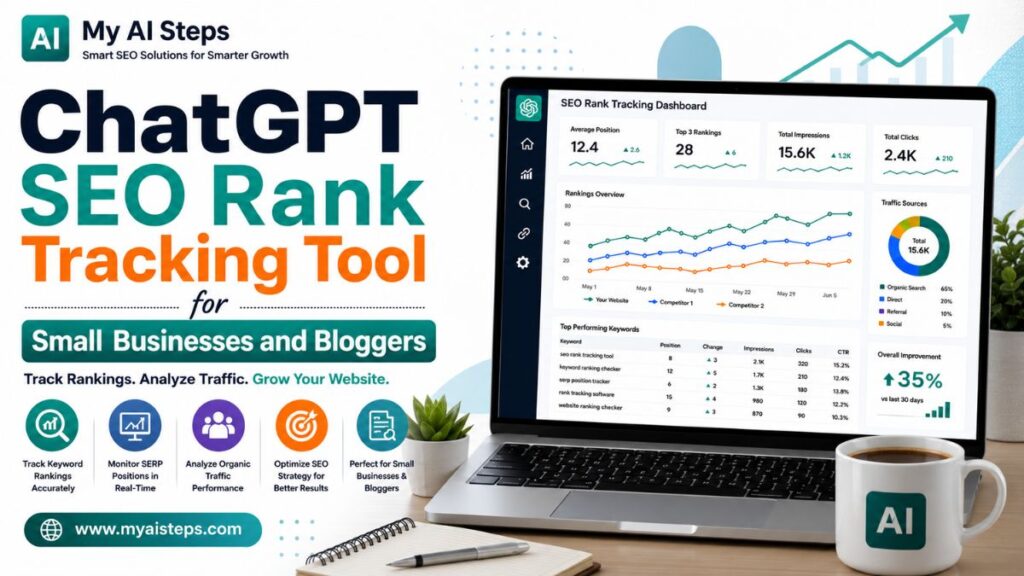
Most rank tracking advice online is written for big agencies with five-figure budgets, which leaves small business owners and solo bloggers feeling like this stuff isn’t really for them. That’s not true. A local bakery tracking ten keywords needs the same basic insight as a large ecommerce brand tracking ten thousand, just at a smaller, more manageable scale.
Take a freelance photographer running her own website. She doesn’t need enterprise-level reporting dashboards. She needs to know whether “wedding photographer in Austin” is climbing or falling, and whether her blog post about engagement photo locations is bringing in any traffic at all. Simple, focused tracking answers exactly that without overwhelming her with data she’ll never use.
Bloggers run into a different but related issue: writing content without ever checking if it’s actually ranking for anything. It’s common to publish a post, feel good about it, and never look back. Six months later, that post might be sitting on page 4 for its target keyword, completely unnoticed. Checking rankings even once a month would’ve flagged that early enough to fix with a few internal links or an updated intro.
For small budgets, the smart move is narrowing focus. Instead of tracking every possible keyword variation, pick the ten to fifteen terms that actually matter for the business — the ones tied to services, products, or topics that bring in real visitors. That keeps tracking useful instead of just another tab left open and ignored.
ChatGPT SEO Rank Tracking Tool to Monitor Daily Keyword Fluctuations
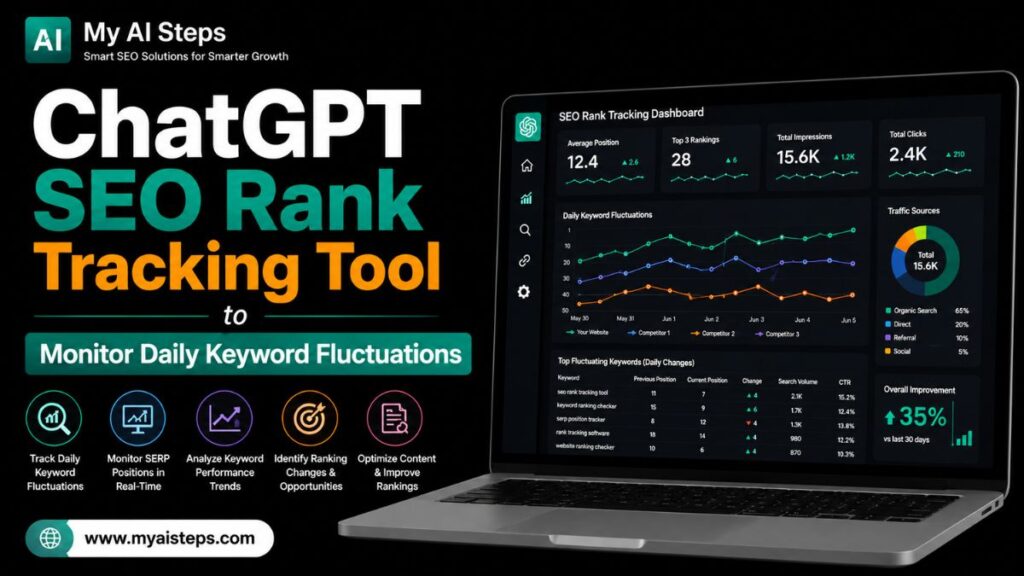
Keyword positions move more than people expect, even without anyone doing anything different. Google tests result variations constantly, and a keyword sitting at position 6 today might show up at position 9 tomorrow with no clear reason. This is normal, and it catches a lot of beginners off guard the first time they see it.
The mistake to avoid here is panicking over single-day changes. A drop of two or three positions overnight usually isn’t worth acting on immediately. What matters more is the pattern over a week or two — is the keyword trending downward consistently, or just bouncing around within a normal range the way most rankings do?
Daily monitoring becomes genuinely useful during specific moments: right after publishing new content, right after a major site change like a redesign or URL restructuring, or right after a confirmed Google algorithm update. In these windows, watching daily movement helps catch problems fast. If a site-wide redirect was set up incorrectly during a redesign, daily tracking might show rankings collapsing within 48 hours, giving enough time to fix the redirects before traffic takes a real hit.
Outside of those moments, checking weekly is usually enough for most small sites. Daily checking without a specific reason tends to create stress over nothing, since natural fluctuation is just part of how search results work.
ChatGPT SEO Rank Tracking Tool with Advanced SEO Insights and Reporting
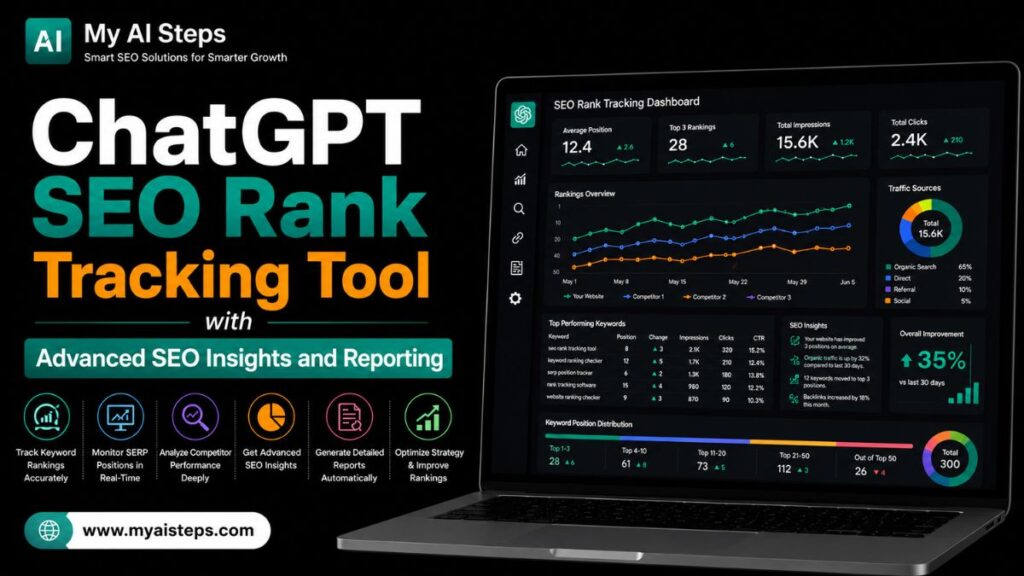
Basic position tracking tells you where a keyword sits. Deeper reporting tells you why it’s there and what to do next, which is the part that actually moves a site forward. This usually includes things like search volume context, ranking history over months rather than days, and visibility into which pages are gaining or losing ground across an entire site at once.
A useful feature here is grouping keywords by topic or page rather than viewing them as one long flat list. If a site has twelve keywords all pointing to a single blog post, seeing them grouped together shows whether that page is strong across its whole topic cluster or only ranking well for one lucky term while the rest lag behind.
Reporting that shows ranking distribution — how many keywords sit in positions 1 to 3, how many in 4 to 10, and how many beyond page one — gives a clearer picture than individual numbers alone. A site with most keywords stuck in positions 15 to 25 has a very different problem than one with keywords clustered in the 8 to 12 range, and the reporting should make that difference obvious at a glance.
For anyone managing multiple sites or clients, exportable reports save real time. Instead of manually compiling screenshots every week, a clean report that already shows trend lines and comparisons cuts that work down significantly, leaving more time for actual optimization instead of data formatting.
A ChatGPT SEO rank tracking tool works best when it’s checked with some regularity and paired with action, not just left running in the background. The real value isn’t the daily number itself but what that number tells you to do next — whether that’s refreshing old content, fixing a technical issue, or doubling down on a page that’s finally gaining traction. Treat it as a feedback loop rather than a report card, and rankings start making a lot more sense over time.
Small sites and large ones both benefit from the same basic habit: check consistently, react to patterns rather than single-day noise, and let the data guide decisions instead of guesswork.
Final Thoughts
Tracking keyword positions isn’t really about watching numbers go up or down for the sake of it. It’s about catching problems early, understanding what’s actually working, and making smarter decisions instead of guessing. Whether you’re running a small blog or managing several client sites, the habit of checking rankings regularly and reacting to real patterns, not daily noise, is what separates steady growth from stagnation.
None of this requires constant attention or expensive tools to get value from. A consistent weekly check, paired with a willingness to act on what the data shows, does most of the heavy lifting on its own.
Frequently Asked Questions
How often should I check my keyword rankings?
Weekly is enough for most sites, with daily checks only after major changes or algorithm updates.
Why do my rankings look different when I search manually?
Google personalizes results based on your search history and location, so manual checks aren’t accurate.
Is mobile ranking different from desktop ranking?
Yes, the same keyword can rank several positions apart on mobile versus desktop.
Does a higher ranking always mean more traffic?
Not always, since click-through rates and search volume also affect actual visitor numbers.
How many keywords should a small business track?
Ten to fifteen high-value keywords are usually enough rather than tracking everything possible.