
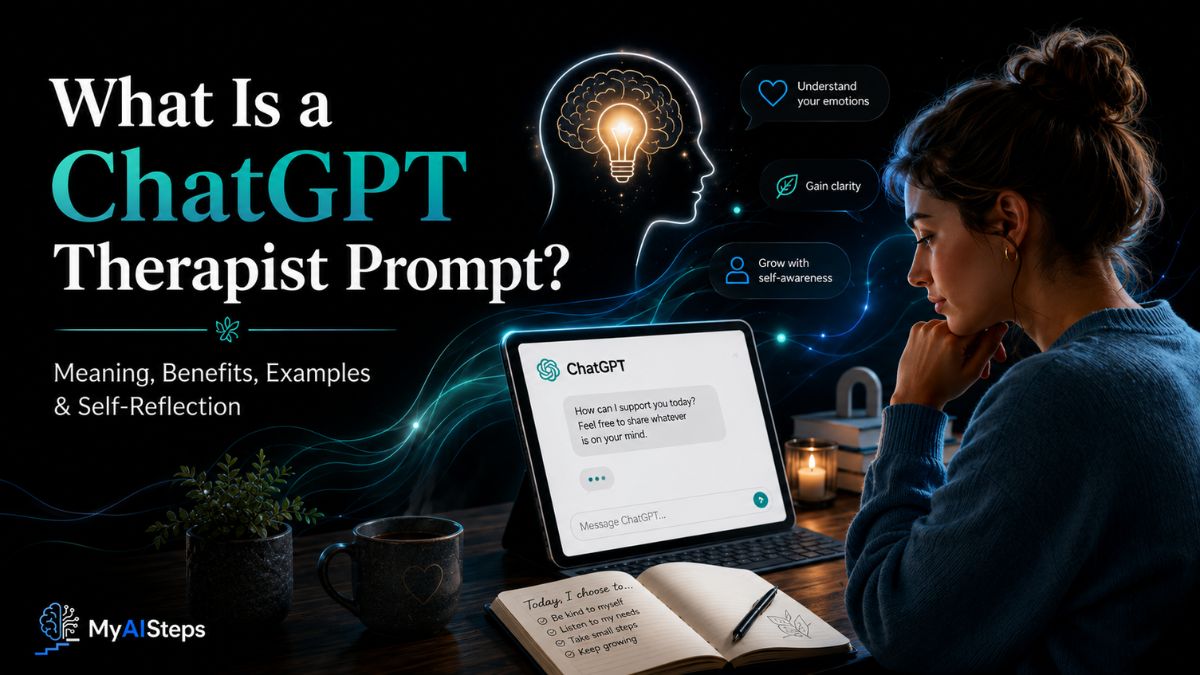
Understanding your thoughts, emotions, and behavior patterns is an important part of personal growth. However, many people struggle to find the time or guidance needed for meaningful self-reflection. This is where a ChatGPT therapist prompt can help by encouraging deeper thinking through structured conversations with AI.
A ChatGPT therapist prompt is a carefully written instruction designed to help you explore your feelings, identify patterns in your behavior, and gain new perspectives on everyday challenges. While it is not a substitute for professional therapy, it can be a useful tool for self-awareness, emotional reflection, and personal development.
What Is a ChatGPT Therapist Prompt?

Quick Definition
A ChatGPT therapist prompt is a structured question or instruction designed to encourage self-reflection, emotional awareness, and personal growth through AI-guided conversations. These prompts help users explore their thoughts and feelings more deeply, but they do not replace professional therapy or mental health treatment.
Unlike casual questions asked to an AI chatbot, therapist prompts are intentionally designed to promote introspection. They encourage users to slow down, examine their experiences, and uncover insights that may not be immediately obvious.
For example:
Instead of asking:
“How can I stop feeling stressed?”
A therapist-style prompt might ask:
“What specific situation is causing stress right now, and what thoughts keep repeating in your mind when you think about it?”
The second question encourages deeper reflection rather than seeking a quick solution.
How Therapist Prompts Differ From Regular ChatGPT Conversations
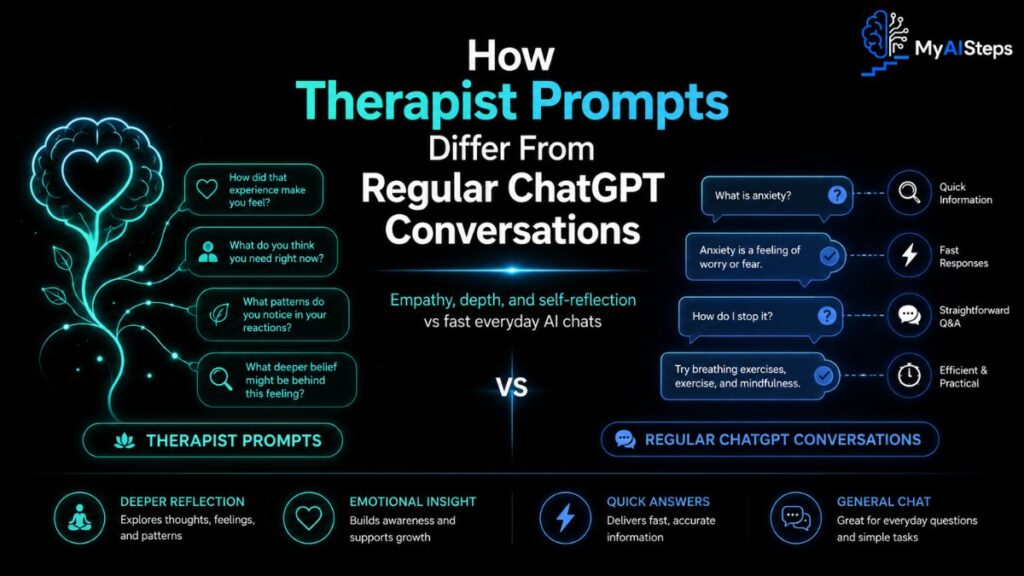
Many people use ChatGPT for everyday tasks such as writing emails, generating ideas, or answering questions. Therapist prompts serve a different purpose.
They are designed to:
- Encourage emotional awareness
- Support reflective journaling
- Promote mindfulness and self-discovery
- Help identify recurring thought patterns
- Improve emotional intelligence
- Foster personal growth
Instead of giving immediate advice, these prompts guide users toward understanding their own experiences more clearly.
Core Elements of an Effective Therapist Prompt
The most effective therapist prompts often include:
Open-Ended Questions
Questions that encourage detailed responses rather than simple yes-or-no answers.
Example:
“What emotions come up when you think about this situation, and why?”
Curiosity Rather Than Judgment
Good prompts invite exploration without criticism.
Example:
“What might this experience be trying to teach you?”
Emotional Exploration
The prompt helps uncover feelings beneath the surface.
Example:
“What need of yours feels unmet right now?”
Reflection on Patterns
The best prompts encourage recognition of recurring behaviors and beliefs.
Example:
“Have you experienced something similar before? What patterns do you notice?”
These elements work together to create meaningful conversations that support self-awareness and personal insight.
Why ChatGPT Therapist Prompts Are Becoming So Popular
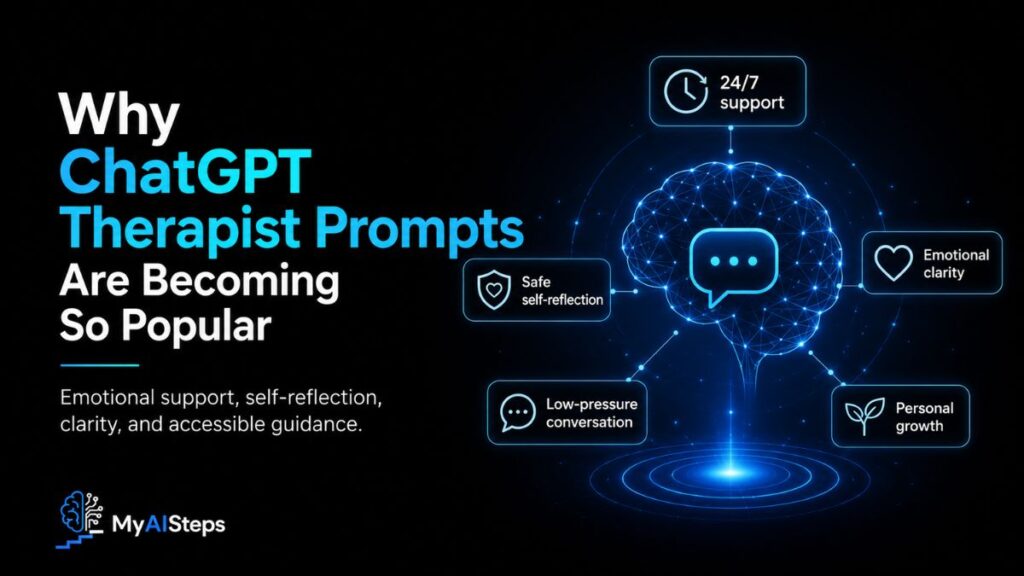
The growing popularity of AI therapist prompts isn’t happening
by accident. Several cultural and technological shifts have contributed to their rapid adoption.
Growing Interest in Mental Wellness
Over the past decade, mental wellness has become a major priority for millions of people.
Individuals are increasingly interested in:
- Self-improvement
- Emotional intelligence
- Mindfulness practices
- Stress management
- Reflective journaling
- Personal growth strategies
People want practical tools that help them better understand themselves, and therapist prompts provide an accessible entry point.
Increased Demand for Self-Reflection Tools
Many individuals recognize the value of reflection but struggle to know where to begin.
Staring at a blank journal page can feel intimidating.
Therapist prompts solve this problem by providing structure.
Instead of wondering what to write, users receive thoughtful questions that guide deeper thinking.
Accessibility and Convenience
Traditional therapy offers immense value, but it may not always be accessible due to:
- Cost barriers
- Long waiting lists
- Geographic limitations
- Scheduling conflicts
While AI cannot replace professional mental health care, therapist prompts offer a readily available tool that people can use anytime.
Whether it’s early morning, late at night, or during a lunch break, meaningful reflection can happen whenever needed.
Reduced Fear of Judgment
Many individuals find it easier to express difficult thoughts when they don’t feel judged.
People may hesitate to share certain feelings with friends, family members, or even therapists initially.
AI provides a neutral environment where users can explore thoughts privately before discussing them elsewhere if needed.
Integration With Modern Digital Habits
Today’s users already rely on digital tools for:
- Fitness tracking
- Meditation
- Productivity
- Journaling
- Education
Using AI-powered reflection tools feels like a natural extension of these existing habits.
How Does a ChatGPT Therapist Prompt Work?
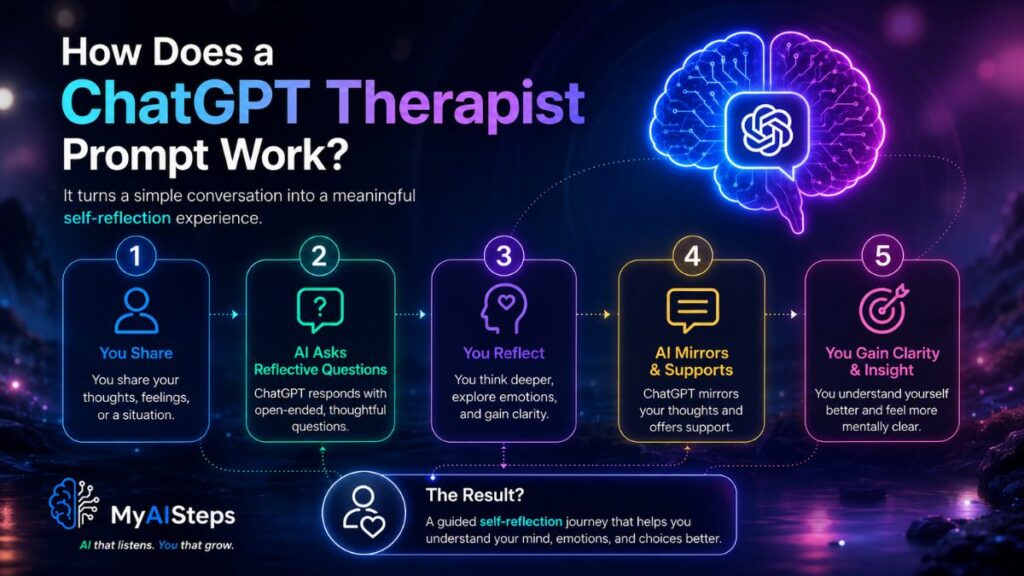
Understanding how therapist prompts work can help you use them more effectively.
Step 1: Identifying a Focus Area
Most therapist-style conversations begin with a specific topic.
Common focus areas include:
- Anxiety
- Relationships
- Career challenges
- Self-confidence
- Stress
- Decision-making
- Personal growth
For example:
“I’m feeling overwhelmed by work responsibilities and don’t know where to start.”
This creates a clear foundation for reflection.
Step 2: Guided Exploration
After identifying the issue, ChatGPT asks follow-up questions designed to deepen understanding.
Examples include:
- What part of this situation feels most difficult?
- When did you first notice these feelings?
- What assumptions are you making?
- What are you afraid might happen?
These questions encourage users to move beyond surface-level reactions.
Step 3: Recognizing Patterns
As the conversation develops, recurring themes often become visible.
A person might discover:
- Fear of failure
- Perfectionist tendencies
- People-pleasing behavior
- Self-critical thinking
- Difficulty setting boundaries
Recognizing these patterns is often the first step toward meaningful change.
Step 4: Developing New Perspectives
Once patterns become clear, therapist prompts often encourage alternative viewpoints.
For example:
“What would you say to a close friend experiencing this same situation?”
This simple shift often reveals greater compassion and objectivity.
Step 5: Identifying Practical Next Steps
Many productive therapist prompts conclude by encouraging action.
Examples include:
- What’s one small step you can take today?
- What boundary would support your well-being?
- What would progress look like this week?
Reflection becomes more valuable when paired with intentional action.
Why Are People Using ChatGPT as a Mental Wellness Tool?
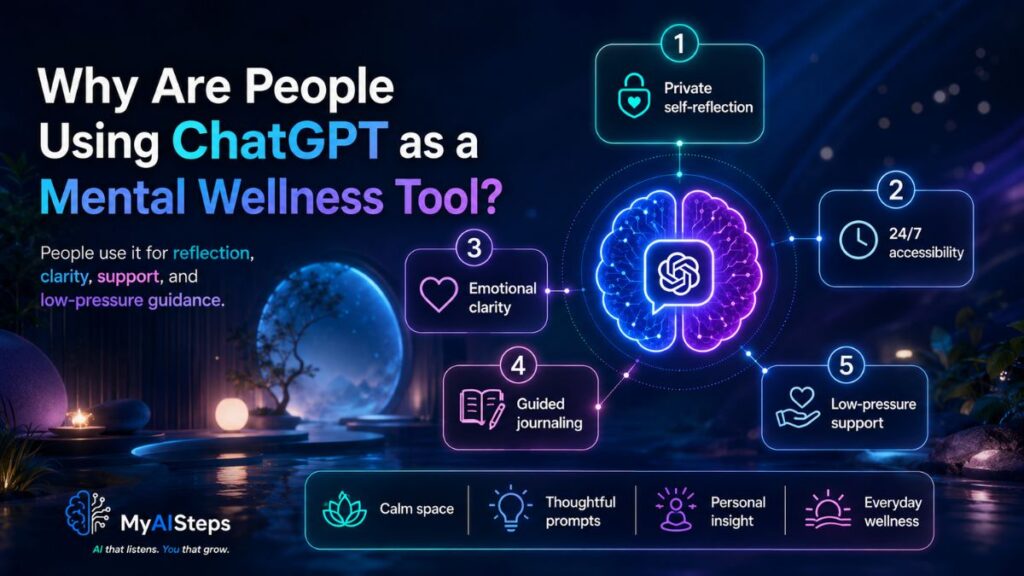
The rise of AI-assisted self-help reflects a broader shift in how people approach emotional well-being.
Bridging the Gap Between Reflection and Action
Many people know they should reflect on their experiences.
The challenge is turning reflection into a consistent habit.
ChatGPT therapist prompts make this process easier by providing immediate structure and guidance.
Supporting Emotional Awareness
One of the most important aspects of mental wellness is understanding emotions accurately.
Many individuals struggle to identify what they are truly feeling.
Instead of saying:
“I feel bad.”
Therapist prompts encourage greater specificity:
- Do you feel disappointed?
- Anxious?
- Frustrated?
- Lonely?
- Overwhelmed?
This increased emotional awareness often leads to better decision-making and healthier coping strategies.
Encouraging Consistent Self-Reflection
Consistency matters more than intensity.
A few minutes of thoughtful reflection several times per week can create meaningful long-term benefits.
Therapist prompts make consistency easier because they remove the need to generate questions independently.
Enhancing Journaling Practices
Traditional journaling remains one of the most effective self-awareness tools available.
However, many people struggle with:
- Writer’s block
- Lack of direction
- Repetitive entries
Guided prompts help transform journaling into a more focused and productive experience.
Creating Opportunities for Personal Growth
Every challenge contains information.
When approached thoughtfully, setbacks can reveal:
- Limiting beliefs
- Hidden fears
- Unmet needs
- Personal strengths
- Growth opportunities
Therapist prompts encourage individuals to extract valuable lessons from everyday experiences.
Personalized Reflection Rather Than Generic Advice
Books, articles, and videos often provide broad advice.
Therapist prompts are different because they adapt to your specific situation.
The conversation evolves based on your responses, creating a more personalized experience that feels relevant to your unique circumstances.
Benefits of Using ChatGPT Therapist Prompts for Self-Reflection
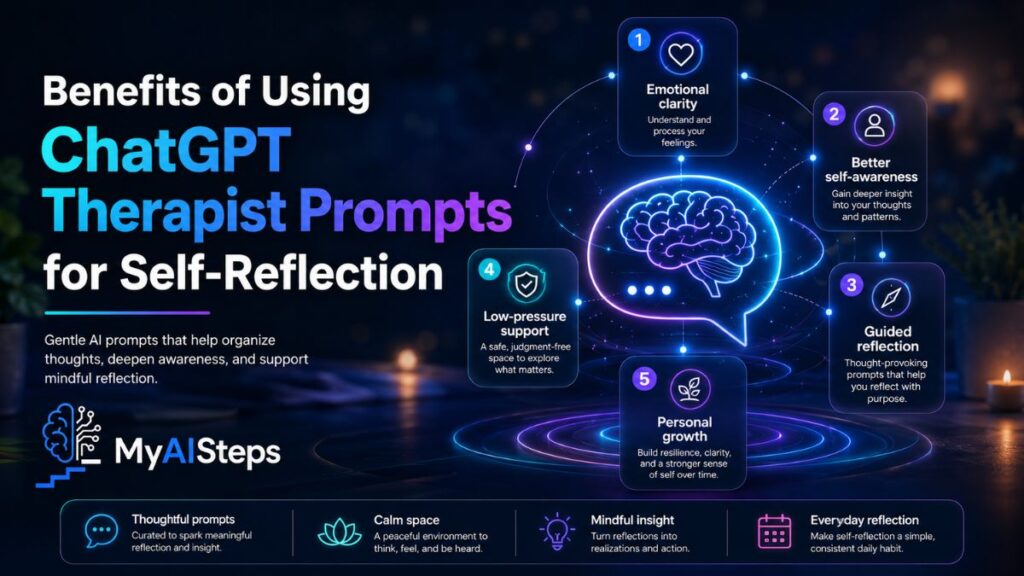
One of the biggest advantages of ChatGPT therapist prompts is their ability to encourage self-reflection. Many people move through life without taking time to analyze their thoughts, emotions, and behaviors. These prompts create a structured opportunity to slow down and think more deeply.
Some key benefits include:
Improved Emotional Awareness
Many individuals struggle to identify what they are feeling. Therapist-style prompts help users recognize emotions and understand why they are experiencing them.
For example:
“What emotions have I felt most often this week, and what situations triggered them?”
Questions like this encourage emotional awareness and can reveal patterns that might otherwise go unnoticed.
Better Stress Management
Stress often feels overwhelming when it remains undefined. By discussing concerns with ChatGPT through targeted prompts, users can break large problems into smaller, manageable pieces.
Increased Self-Understanding
Self-reflection allows people to discover recurring behaviors, limiting beliefs, and personal strengths. Understanding these patterns can lead to healthier decisions and improved personal growth.
A Judgment-Free Space
Many people find it easier to express themselves when they know they will not be judged. ChatGPT provides a neutral environment where users can explore difficult thoughts without fear of criticism.
Support for Journaling and Mindfulness
Therapist prompts work exceptionally well alongside journaling practices. They can inspire daily reflection and help users develop greater mindfulness about their emotions and actions.
Practical Examples of Effective ChatGPT Therapist Prompts
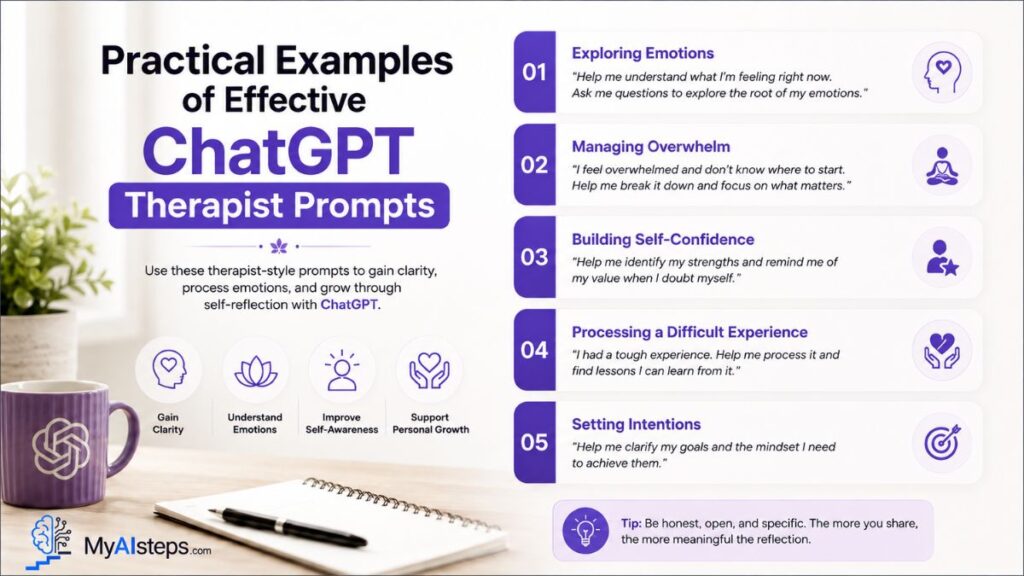
The quality of the response often depends on the quality of the prompt. Below are some examples that encourage meaningful self-reflection.
For Anxiety
Prompt:
“Help me explore the source of my anxiety by asking thoughtful questions one at a time.”
For Stress
Prompt:
“Act like a supportive therapist and help me identify the biggest causes of stress in my life right now.”
For Self-Confidence
Prompt:
“Ask me questions that help uncover limiting beliefs affecting my confidence.”
For Relationships
Prompt:
“Help me analyze a recent disagreement with someone close to me and identify possible communication improvements.”
For Personal Growth
Prompt:
“Guide me through a self-reflection exercise to discover areas where I can grow personally and professionally.”
For Emotional Awareness
Prompt:
“Ask me reflective questions that help me better understand my emotions and reactions.”
These prompts encourage deeper thinking and often produce more useful responses than generic questions.
Can ChatGPT Replace a Licensed Therapist?

This is one of the most common questions people ask.
The short answer is no.
While ChatGPT can provide reflection exercises, emotional support prompts, and general wellness guidance, it cannot replace a licensed mental health professional.
Here are some important differences:
| ChatGPT | Licensed Therapist |
| Uses information from training data | Uses professional training and clinical experience |
| Cannot diagnose conditions | Can assess and diagnose mental health conditions |
| Offers general guidance | Provides personalized treatment plans |
| Available anytime | Requires appointments |
| Cannot provide emergency support | Can offer professional intervention when necessary |
ChatGPT works best as a self-reflection and wellness tool rather than a substitute for therapy.
If someone is experiencing severe emotional distress, persistent mental health symptoms, or a crisis situation, professional support is the appropriate option.
When Should You Use a Therapist Prompt in ChatGPT?
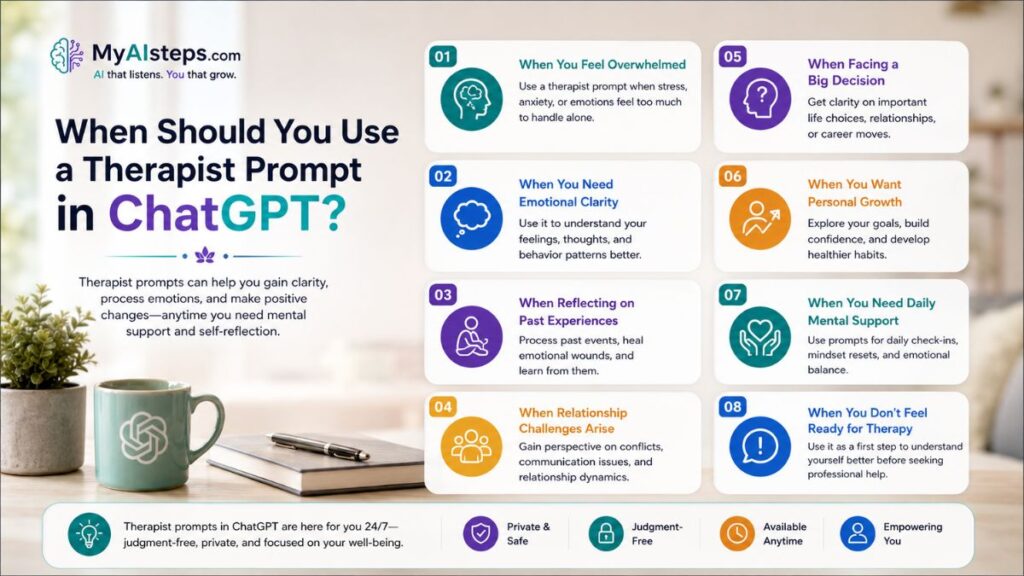
Therapist prompts can be useful in many situations.
You may benefit from them when:
- You want to understand your emotions better.
- You need help organizing your thoughts.
- You are dealing with everyday stress.
- You want to improve self-awareness.
- You are journaling regularly.
- You want to reflect on personal challenges.
- You are working on personal development goals.
Many users find these prompts especially valuable during periods of transition, such as starting a new job, entering a relationship, ending a relationship, or pursuing major life goals.
How to Write an Effective ChatGPT Therapist Prompt

Creating better prompts leads to better responses.
Follow these simple strategies:
Be Specific
Instead of saying:
“Help me.”
Try:
“Help me understand why I feel overwhelmed whenever I have multiple deadlines.”
Specific prompts provide clearer context and produce more relevant insights.
Request Guided Questions
Therapists often use questions rather than direct advice.
Example:
“Ask me a series of reflective questions to help me understand my fear of failure.”
Focus on One Issue at a Time
Trying to explore multiple problems in a single prompt can create confusing responses.
Choose one topic and examine it thoroughly before moving to another.
Encourage Reflection
Use prompts that invite deeper thinking.
For example:
“What patterns might be contributing to my current stress levels?”
Ask for Actionable Insights
Reflection becomes more valuable when paired with practical steps.
Example:
“Help me identify three small actions I can take this week to improve my emotional well-being.”
Common Mistakes to Avoid
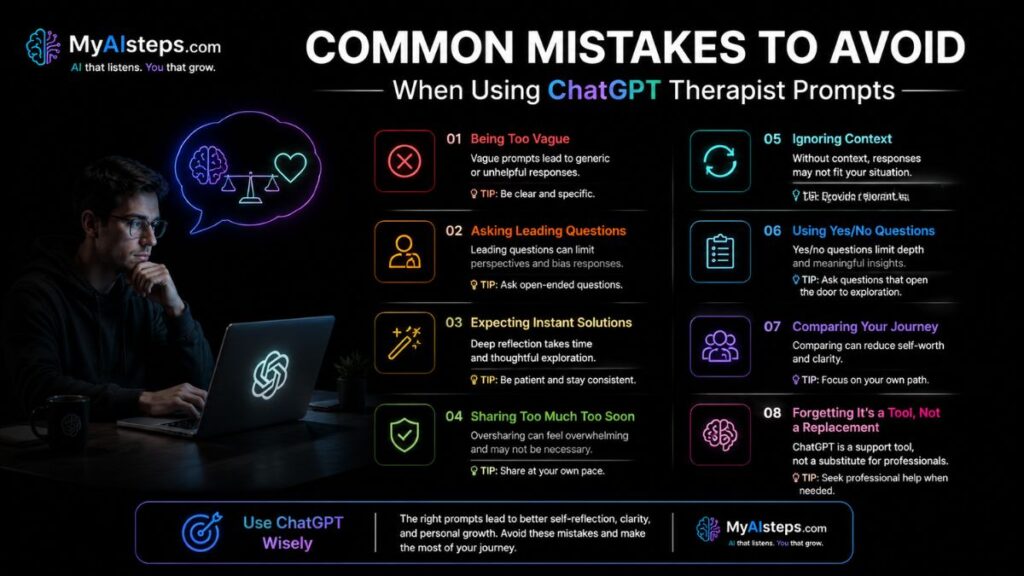
Many people fail to get useful results because of avoidable mistakes.
Using Vague Prompts
General questions often generate generic answers.
Expecting a Medical Diagnosis
ChatGPT is not a doctor, psychologist, or licensed therapist.
Treating AI Advice as Professional Therapy
AI-generated suggestions should be viewed as informational rather than clinical guidance.
Sharing Excessive Personal Information
Users should be mindful about the personal details they disclose when interacting with AI tools.
Seeking Immediate Solutions to Complex Problems
Personal growth takes time. Reflection tools can support the process, but they cannot instantly solve deep emotional challenges.
Privacy and Safety Considerations
Whenever using AI tools for personal reflection, privacy should remain a priority.
Consider these best practices:
- Avoid sharing highly sensitive personal information.
- Do not disclose financial details or private identification information.
- Understand that AI systems may not provide perfect responses.
- Verify important information from trusted professional sources.
- Use ChatGPT as a supplementary tool rather than a primary mental health resource.
Responsible usage helps create a safer and more productive experience.
Frequently Asked Questions (FAQs)
Is a ChatGPT therapist prompt real therapy?
No. Therapist prompts are designed to encourage self-reflection and personal insight, but they are not a replacement for professional therapy.
Are ChatGPT therapist prompts safe to use?
Generally, they can be useful for reflection and self-awareness. However, users should avoid sharing highly sensitive personal information and should seek professional support when needed.
Can ChatGPT help with anxiety?
ChatGPT can provide reflection exercises, stress-management ideas, and self-awareness prompts. It cannot diagnose or treat anxiety disorders.
What is the best ChatGPT therapist prompt?
A highly effective prompt is:
“Act like a supportive therapist and ask me thoughtful questions one at a time to help me understand the root cause of my current emotional challenge.”
Why are therapist-style prompts becoming popular?
They offer an accessible and convenient way to explore thoughts, emotions, and personal growth without requiring appointments or specialized knowledge.
Conclusion
A ChatGPT therapist prompt is a carefully designed instruction that encourages meaningful self-reflection, emotional awareness, and personal growth. By asking thoughtful questions and guiding conversations, these prompts can help users better understand their feelings, identify behavioral patterns, and explore challenges from new perspectives.
While ChatGPT can be a valuable tool for mindfulness, journaling, and self-discovery, it should not be viewed as a replacement for a licensed therapist. Instead, it works best as a supportive companion for everyday reflection and personal development.
Whether you are looking to manage stress, improve self-awareness, strengthen relationships, or simply understand yourself better, therapist-style prompts can provide a structured starting point for deeper conversations and healthier habits.
Start experimenting with thoughtful ChatGPT therapist prompts today and discover how intentional self-reflection can support your personal growth journey.