
Open any creator’s feed right now and you’ll keep hitting the same three words in captions and video titles: “try this prompt.” One line of text turns a plain selfie into a Pixar-style portrait, or rewrites a boring resignation letter into something people screenshot and repost. Behind most of it sits a single ChatGPT trending prompt, meaning a specific bit of wording that spreads because it reliably produces a result people want to share. The frustrating part is the speed: these prompts show up overnight, get copied thousands of times in days, and go stale almost as fast. Watch the wrong places and you’ll always land on the wording a week after it stopped working.
This guide covers what makes a prompt trend instead of just being useful, why some wordings catch fire while near-identical ones sink, and where to find fresh ones before everyone’s feed is drowning in them. You’ll also get a simple way to test and adapt what you find, so you stop depending on someone else’s viral discovery.
What Is a ChatGPT Trending Prompt?
A ChatGPT trending prompt is a short piece of input text, usually a sentence or two, that spreads quickly across social platforms because it reliably produces a result people find funny, useful, flattering, or worth screenshotting. It isn’t trending because it’s clever. It’s trending because thousands of different people typed a near-identical wording and got a payoff good enough to repost.
Picture the wave of “turn my photo into a cartoon” prompts, or the “roast my LinkedIn headline” format, or the “explain my job to a five-year-old using only emojis” gag. None of these are complicated instructions. What they share is a repeatable formula, and once you can see it, you can spot a real trend from a mile away.
Most prompts that catch on carry four traits, whatever the topic. First, a defined role or lens, where the prompt tells the model to answer as a blunt career coach, a Victorian narrator, or a sarcastic best friend. Second, a personalization slot, where you drop in your own name, photo, or bad habit so the output feels custom-made. Third, a tight output format like three bullet points or an image in a named art style, since a clean format is easy to screenshot. Fourth, a payoff that triggers a reaction, whether surprise, humor, or genuine usefulness, strong enough that people want others to see it.
It’s worth separating this from a “good prompt” in the everyday sense. A good prompt might be the detailed instruction a marketer writes to get consistent blog outlines every week: useful, but private and unglamorous. A trending prompt is public by nature. It only becomes a trend once it leaves someone’s private workflow and gets copy-pasted by strangers chasing the same result.
| Prompt Category | Core Format | Why People Share It |
|---|---|---|
| Visual / avatar | Turn a photo into a named art style | Instant before-and-after comparison |
| Persona-based | Respond as a specific character or expert | Novelty and entertainment value |
| Self-analysis | Analyze my writing, resume, or habits | Feels personal and revealing |
| Productivity formula | Reusable template for a repeated task | Saves visible time and effort |
| Comedic / roast | Deliver blunt, exaggerated feedback | Humor makes it inherently shareable |
Why Do ChatGPT Trending Prompts Become Popular?
Popularity here isn’t luck. A handful of mechanics decide whether a prompt dies in a day or circulates for weeks.
The biggest one is personalization. People don’t share generic outputs, they share outputs that feel like they’re about them. A prompt that turns your photo, name, or writing sample into a distinct result taps the same instinct that makes personality quizzes and horoscopes spread. It feels like a reveal, even when the instruction underneath is identical for everyone.
Close behind is the copy-paste advantage. A trending prompt almost always works with zero editing. You see a result, grab the wording from a screenshot or a Reddit comment, paste it in, and get something comparable in seconds. Prompts that force you to understand context or write anything yourself rarely spread, because that friction breaks the chain.
Platforms do a lot of the pushing too. Short-form video and image feeds reward clear visual contrast, like the original photo next to the stylized version, so a prompt that naturally produces that contrast gets amplified regardless of how impressive it is technically. There’s a status angle as well: using a fresh prompt early signals that you’re funny or ahead of the curve, and that small ego boost pulls in the next wave of users.
Finally, communities do the validating. A prompt rarely goes viral from one post. It usually gets picked up in a subreddit thread, tested by dozens of people who each share their own version, and that repetition is what tells wider platforms something is worth surfacing. One pattern worth remembering: prompts tied to a specific visual style spike hard and fade within one to three weeks, while prompts tied to a repeated personal task, like fixing awkward messages or summarizing dense text, last far longer because people keep needing that exact output.
How to Find ChatGPT Trending Prompts for Free
You don’t need a paid newsletter or a prompt marketplace to stay current. Almost everything surfaces first in free, public spaces, so you just need to know where to look and how often to check.
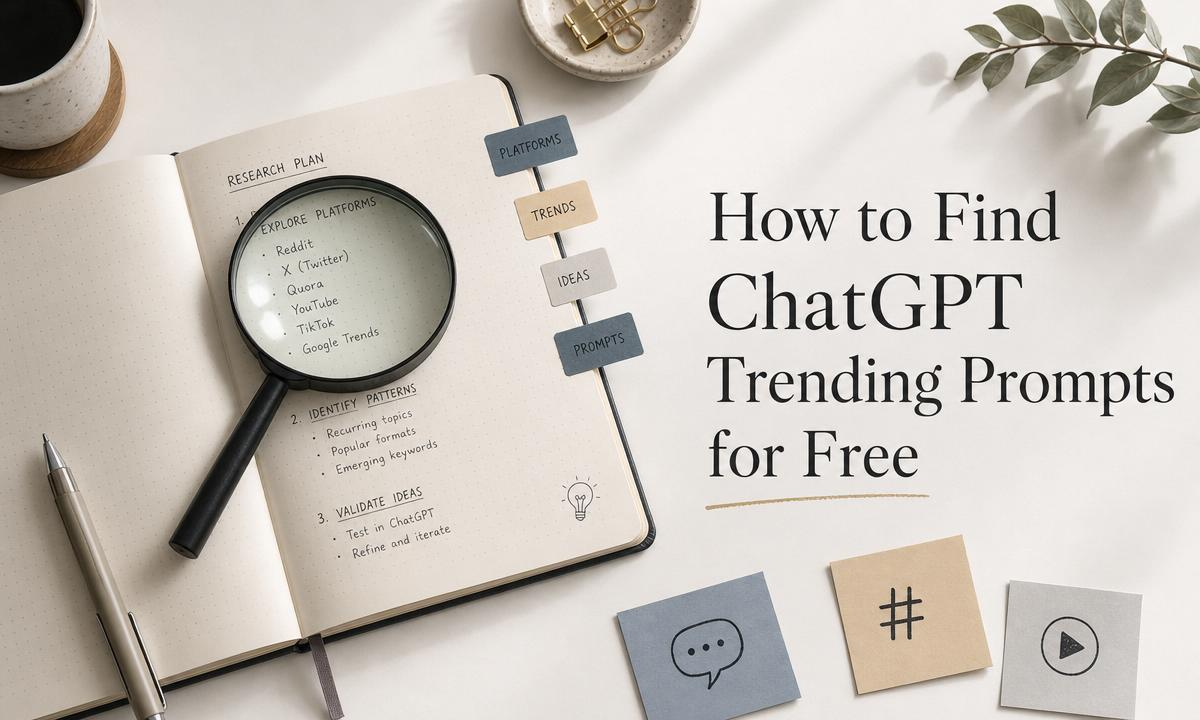
Reddit is one of the fastest places to catch a prompt before it hits mainstream feeds. Subreddits built around prompt sharing and AI discussion run daily threads where people post exact wording next to their results, and sorting by “Top, This Week” or “Hot” surfaces whatever’s spreading. The comments are a bonus, since other users often post tested variations that save you the trial-and-error step.
X (formerly Twitter) tends to break trends even earlier, especially when a large account shares a result. Searching “prompt:” alongside a topic, or checking quote-tweets under a viral AI image, usually leads straight to the original wording. Compilation threads promising “10 prompts you need to try” are common, and while plenty are recycled, the top few entries are often fresh.
Free prompt directories are the tidiest option. These sites catalog and rank prompts by category and popularity, so you can browse writing, image, career, or productivity prompts and sort by engagement. Everything is already organized and tested, which saves you the digging that scattered social posts demand.
TikTok and Instagram Reels are where visual and persona-based prompts move fastest, especially avatar and style-transfer trends. Searching the in-app bar for “prompt trend” or a specific art style usually pulls up creators demonstrating the same wording, often with the text on screen. Discord is the early-warning layer beneath all of this, since many AI servers keep prompt-sharing channels where wording appears days before it breaks wider. And if you want a data signal, checking search interest around specific prompt phrases can reveal a trend building before it’s obvious elsewhere.
| Source | Best For | Update Speed |
|---|---|---|
| Reddit communities | Detailed, tested prompts with feedback | Daily |
| X (Twitter) | Breaking trends and viral moments | Hourly |
| Prompt directories | Organized, ranked, searchable prompts | Weekly |
| TikTok / Reels | Visual and persona-based trends | Daily |
| Discord servers | Early access before wider spread | Real-time |
Finding a prompt is only half the job. Copying it word for word usually means publishing the same output everyone else has, so treat what you find as a template, not a finished product. Swap the persona for one that fits your niche, change a paragraph output into a numbered list, or apply the same structure to a different subject. A “roast my resume” format rebuilds cleanly into “roast my content calendar,” same mechanic, new audience. The prompts that keep working after a trend dies are the ones people bothered to adapt.
Best ChatGPT Trending Prompt Categories in 2026
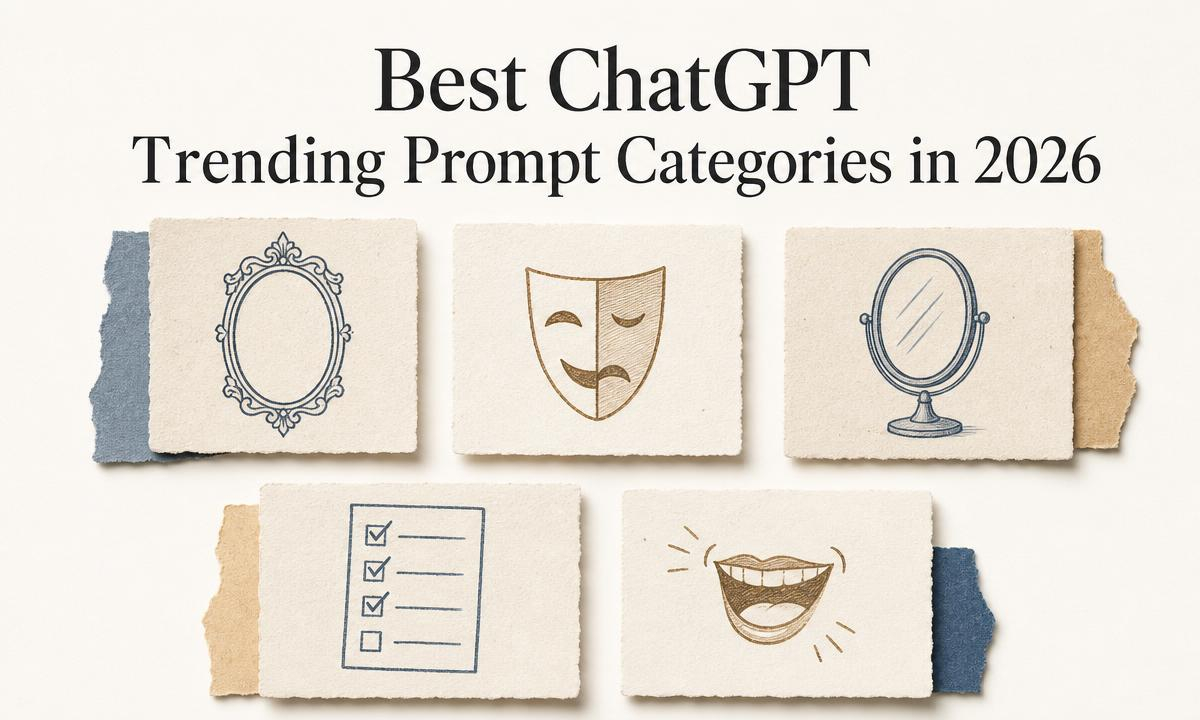
Not every category trends the same way, and knowing which bucket a prompt falls into makes its shelf life easy to predict before you test it. A few keep resurfacing cycle after cycle, just wearing slightly different clothes each time.
Visual transformation prompts are the most consistent. Take a personal photo, reimagine it in a specific art style or era, and the before-and-after format does the sharing for you. What changes each cycle isn’t the mechanic, only the style being applied.
Career and professional writing prompts have quietly turned into one of the steadiest categories rather than a passing fad. Resume punch-ups, cover letter rewrites, and blunt feedback on a LinkedIn headline all solve a recurring problem, so they don’t fade the way visual trends do. Persona and roleplay prompts sit right next to them, asking for a response filtered through a brutally honest mentor or an exaggerated interviewer, which invites people to try their own spin and compare results.
Self-reflection prompts hand over a sample of your own behavior, like a writing style or a daily routine, for an outside read, and they spread fastest inside close-knit communities where comparing results is half the fun. Productivity and life-admin prompts are the unglamorous workhorses, turning a fridge inventory into a meal plan or a messy to-do list into a schedule. They rarely go viral, but they pull steady search interest because the need never disappears. Comedy and roast prompts are the opposite: pure entertainment, fast to spread and fast to burn out, but worth watching because they show which tone is landing right now.
The practical takeaway: grab visual and comedic prompts quickly before they saturate, and build career, productivity, and analysis prompts into a repeatable habit.
10 ChatGPT Trending Prompt Examples You Can Copy and Use
Here are ten practical prompts spanning the categories above. Each works as-is, but you’ll get sharper results by dropping your own specifics into the blanks:
- Style-transfer request: “Reimagine this photo as if painted in [a specific art style or decade’s aesthetic], keeping the pose and composition the same.” The output is instantly comparable to the original.
- Blunt resume review: “Review this resume as a hiring manager who reads two hundred applications a week and has no patience for filler. Point out exactly what would get it rejected in the first ten seconds.” The narrow persona makes the feedback bite.
- Tone translator: “Rewrite this message so it sounds firm and professional without coming across as rude or passive-aggressive.” A near-universal need, which is why it keeps resurfacing.
- Five-year-old explainer: “Explain [a complex topic] as if talking to a curious five-year-old, using a simple analogy instead of technical terms.” The analogies tend to stick.
- Brutally honest mentor: “Respond as a mentor who has heard every excuse and won’t let me get away with vague goals. Ask me the hard questions about this plan before I move forward.” The constraint pushes past generic encouragement.
- Fridge-to-meal-plan: “Here’s what’s in my fridge and pantry: [list items]. Build me a three-day meal plan that uses most of it before anything spoils.” Practical and repeatable.
- Roast-my-routine: “Look at my daily routine below and roast it like a comedian doing a bit about modern habits, then give one genuinely useful suggestion at the end.” Entertainment plus just enough value to justify sharing.
- Writing-style mirror: “Read this paragraph I wrote and describe my writing style back to me as if you’re a book critic reviewing my voice.” It surprises people with how accurate it feels.
- Negotiation script: “Write a short, calm script I can use to ask for a raise, including how to respond if the answer is no.” It solves a high-stakes moment people are anxious to prepare for.
- Idea stress-test: “Play devil’s advocate against this business idea. Give me the three strongest reasons it might fail before I commit more time to it.” Popular for pressure-testing a side hustle before investing further.
None of these need to stay word-for-word. Once you’ve tried one and liked the result, that’s your signal to build a version tailored to your own audience.
How to Write Your Own ChatGPT Trending Prompt
Leaning entirely on prompts you found elsewhere means always working with something everyone else already has. Writing your own gives you something original to share, and the process is more repeatable than it looks.
Start with a narrow want, not a broad one. “Help me write better” is too vague to trend. “Rewrite my Instagram caption so it sounds confident instead of apologetic” is specific enough that the output feels sharp and usable, which is the first requirement for anything shareable.
Then attach a persona or lens. Instead of asking for feedback in general, ask for it through a no-nonsense editor, a skeptical investor, or a supportive but honest friend. That single choice often separates a flat response from one with enough personality to screenshot. Next, build in a personalization slot, a blank the user fills themselves, whether that’s a photo, a habit, or a decision they’re weighing. That blank makes the output feel tailor-made instead of templated, and it’s also what makes the prompt spread, since everyone gets a slightly different result worth comparing.
Decide the output format before you lock the wording, because three tight bullet points read very differently from a full paragraph even with the same instruction. Punchy formats tend to win for entertainment, while numbered steps work better for anything practical. Then test the draft on more than one input, running it against your resume and a friend’s before deciding it’s ready. A prompt that only works on one specific input isn’t a formula yet, it’s a coincidence.
Last, give it one distinctive touch that sets it apart from the dozens of similar prompts circulating, whether an unusual persona, an unexpected twist, or a format nobody’s tried for that use case. The prompts that get copied most aren’t the most complicated ones. They’re the ones with a single memorable hook that makes people want to try it themselves.
Common Mistakes to Avoid When Using Trending Prompts
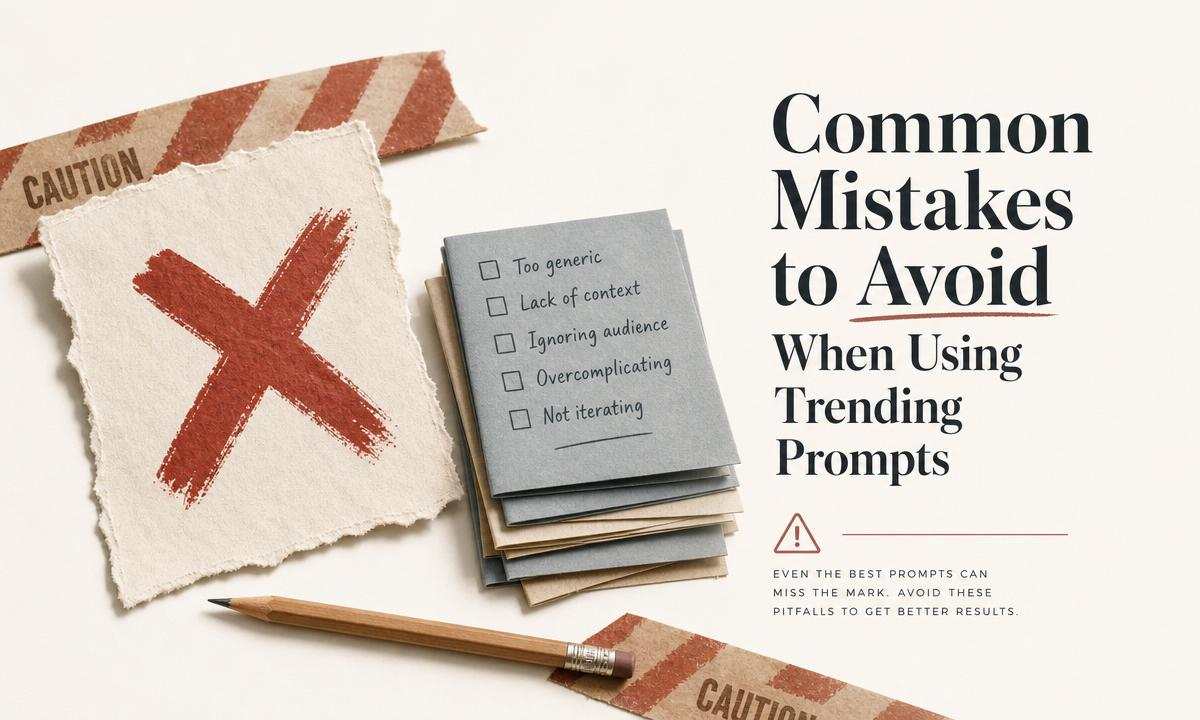
The most common mistake is copying a prompt without personalizing any part of it. Used exactly as-is, it tends to produce a flat, generic result that never shows why it trended. That personalization slot does most of the work, and skipping it defeats the point.
A close second is chasing every trend regardless of fit. A comedic roast format on a professional or B2B account usually reads as out of place rather than clever, so ask whether a trend actually matches your audience before adopting it. Related to that is publishing the first result without testing variations, since the first output isn’t always the best. Running the prompt two or three times, or nudging the wording, often surfaces a stronger version.
Timing trips people up more than they expect. A prompt that felt fresh two weeks ago can feel stale by the time it reaches a slower audience, and posting it that late makes content look behind rather than current. Overloading is another quiet killer, because trending prompts work by staying focused. Piling on a specific tone, a word count, three formatting rules, and a call to action all at once tends to muddle the result instead of delivering the clean payoff that made the original spread.
Two accuracy mistakes round out the list. Assuming identical wording always produces identical output is risky, since results vary, so generate a couple of versions before building a whole post around one. And for prompts meant to inform rather than entertain, don’t skip fact-checking, because a prompt built for explanation can produce confident, wrong details, and its popularity says nothing about whether every figure is correct. Avoid these and the prompts you use will hold up once real people start poking at them.
How ChatGPT Trending Prompts Improve Productivity and Creativity

Past the entertainment value, trending prompts solve a real problem for anyone who isn’t naturally good at writing instructions: they hand over a proven structure instead of a blank page. That matters most for beginners, who often freeze up when asked to describe exactly what they want.
On the productivity side, the win is speed. A tested prompt for triaging an inbox or turning a rough outline into a plan lets you skip the trial-and-error phase. A freelancer handling client emails can reuse a tone-adjustment prompt every week instead of rewriting from scratch. A student facing a dense chapter can lean on an explainer prompt to break the material into something they’ll retain before an exam.
On the creative side, the benefit works differently. A trending prompt often unblocks a task not by doing the thinking for you, but by giving you a shape to react against. A creator staring at an empty content calendar can use a devil’s-advocate prompt to stress-test five video ideas in minutes. Someone stuck on a personal essay can use a persona prompt to hear their writing in a different voice, which often sparks a direction they wouldn’t have reached alone.
There’s a quieter payoff too. Repeated exposure to well-built prompts teaches pattern recognition, and after enough of them, most people start noticing the underlying formula of persona, personalization, format, and payoff without trying to. That’s usually where someone stops searching for prompts and starts writing effective ones on instinct.
| Benefit | What It Solves | Real-World Example |
|---|---|---|
| Productivity | Removes the blank-page problem | Reusing a tone-adjustment prompt for weekly client emails |
| Productivity | Speeds up learning dense material | Using an explainer prompt to study before an exam |
| Creativity | Tests ideas before you commit time | Running a devil’s-advocate prompt against a content idea |
| Creativity | Offers a fresh angle on your own writing | Reflecting an essay through a different persona |
Frequently Asked Questions About ChatGPT Trending Prompts
What makes a prompt “trending” rather than just popular?
A trending prompt is one that many unrelated people start using and sharing within a short window, not something a single creator posted once.
How long does a typical trending prompt stay relevant?
Visual and comedic prompts often fade within one to three weeks, while practical prompts tied to recurring tasks can stay useful for months.
Can I use a trending prompt for professional or business content?
Yes, as long as the tone matches your audience. Career and productivity prompts translate well to professional use, while comedic ones usually don’t.
Will the same prompt always produce an identical result?
No, results vary between attempts, so generate more than one version before relying on a single output.
Is copying a trending prompt exactly a problem?
It’s fine for personal use, but personalizing the wording produces more original results than a direct copy.
Where do new prompt trends usually appear first?
Most start in niche communities like Reddit threads or Discord servers before spreading to wider platforms.
How do I know if a trend has already peaked?
If the same prompt keeps showing up across your main feeds and starts feeling repetitive, it’s likely already saturated.
Final Thoughts: Choosing the Right ChatGPT Trending Prompt for Your Needs

A trending prompt is really just a formula that thousands of people already tested before it reached you: a role, a personal detail, a tight format, and a payoff worth sharing. Once you can spot that structure, finding fresh ones stops feeling like guesswork and starts feeling like pattern recognition. The categories, examples, and mistakes here aren’t meant to be memorized word for word. They’re meant to give you a working sense of what separates a prompt worth using from one that’s already run its course.
The right prompt for you depends less on what’s viral this week and more on what solves a problem you actually have, whether that’s saving time, sparking an idea, or getting a laugh out of a slow afternoon. Treat the trending ones as a starting point instead of the finish line, and you’ll end up with results that outlast the trend that pointed you to them.