

Selling a home used to mean one thing: hiring a real estate agent, paying for professional photos, and hoping a marketing expert could write a listing that actually gets clicks. But that’s changing fast. More homeowners are now turning to AI tools like ChatGPT to write their own property descriptions, and the results are surprising even seasoned agents.
This is the story of one homeowner who used ChatGPT to sell his home faster, without spending a single rupee on a copywriter or marketing agency. His experience shows exactly how AI can help everyday sellers create listings that attract more buyers, get more views, and close deals quicker. If you’re planning to sell your home and want a smarter, low-cost way to market it, this story will show you exactly how it’s done, step by step, mistake by mistake, and lesson by lesson.
Why More Homeowners Are Using ChatGPT to Sell Their Homes

Home selling has always depended heavily on presentation. A poorly written listing can make a beautiful house look unappealing, while a well-written one can make an average home feel like a must-see. That’s exactly the gap ChatGPT is filling for homeowners today.
Traditionally, sellers had two choices: write the listing themselves and risk sounding flat or generic, or pay a professional copywriter, which can cost anywhere from a few thousand rupees to much more depending on the market and the agency. Most first-time sellers don’t have that kind of budget set aside, and many don’t have the writing experience needed to make a listing stand out either. That leaves a gap, and it’s exactly the gap AI tools have started to fill.
ChatGPT changed that equation for this homeowner. It gave him a way to:
- Write a polished, professional-sounding listing in minutes instead of hours
- Test multiple versions of the same description to see what sounded best
- Highlight features he wouldn’t have thought to mention on his own
- Match the tone real estate buyers respond to, without hiring anyone
- Save the money he would have spent on a copywriter and put it toward better photography instead
This shift isn’t just about saving money, although that matters a lot to someone selling a home on a tight timeline. It’s also about accessibility. AI tools are levelling the playing field, letting regular homeowners compete with professionally marketed listings using nothing but a laptop, an internet connection, and a good prompt. Real estate agents have known for years that word choice affects buyer perception, and now that knowledge is available to anyone willing to ask the right questions.
It’s also worth noting why this trend is growing so quickly in 2026. Listing sites are more crowded than ever, buyers scroll fast, and the average time spent reading a single property description is shrinking. That means sellers need every listing to work harder in less time, and a tool that can instantly rewrite, tighten, and polish a description gives homeowners a real edge without any extra cost.
How One Man Used ChatGPT to Create a Better Home Listing
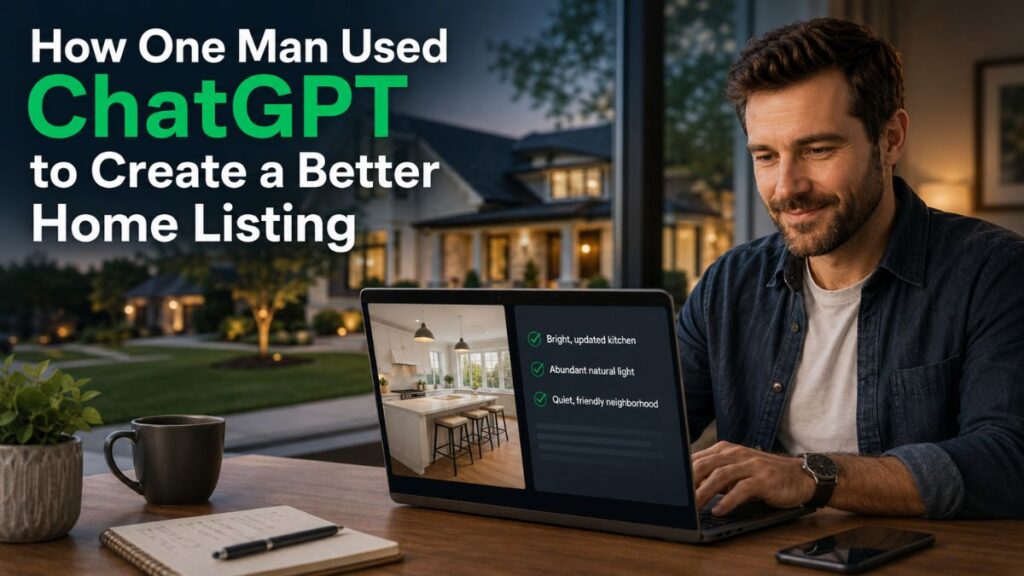
The homeowner in this story had already tried writing his own listing. It described the basics: three bedrooms, two bathrooms, a garage, and a backyard. It was accurate, but it was boring. After two weeks online with barely any inquiries, he decided to try something different.
Instead of describing the house feature by feature, he opened ChatGPT and asked it to help him write a listing the way a professional real estate copywriter would. He gave it details about the home, the neighborhood, nearby schools, and what made the property special, like natural light in the living room and a recently renovated kitchen. He also mentioned smaller details that buyers often care about but sellers forget to include, like the direction the backyard faces, how quiet the street is in the evenings, and how close the nearest grocery store and park were.
Within minutes, ChatGPT turned those plain facts into a description that told a story. Instead of “kitchen has new cabinets,” the AI suggested something like “a beautifully renovated kitchen designed for family meals and weekend gatherings.” Instead of “backyard is fenced,” it suggested framing it as a private, low-maintenance space perfect for evenings outdoors. That small shift in language made the listing feel warmer and more relatable, and it’s a big reason buyers started paying attention.
What surprised him most was how quickly the tone changed once he gave ChatGPT context about the kind of buyer he wanted to attract. When he mentioned the home was in a quiet, family-friendly area near good schools, the AI naturally leaned into language that would resonate with parents. This showed him that the more background he provided, the more targeted and effective the output became, rather than something generic that could describe any house on the block.
What Prompts Helped Him Write a High-Converting Property Description
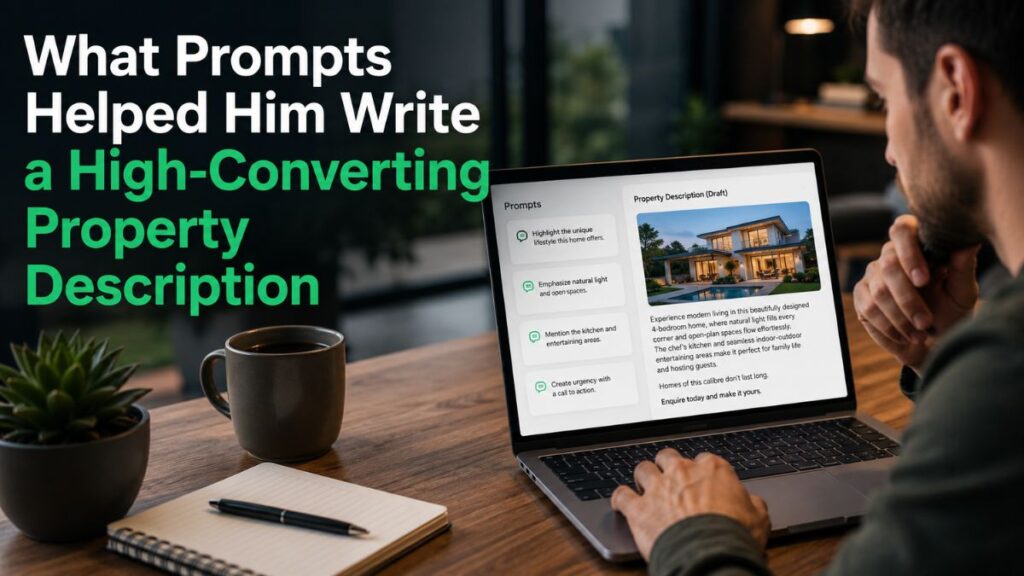
The real secret wasn’t just using ChatGPT. It was knowing what to ask it. He didn’t just type “write a home listing.” He gave specific, detailed prompts that guided the AI toward buyer-focused language, and he treated the first response as a starting point rather than a finished product.
Some of the prompts that worked well for him included:
- “Write a warm, inviting property description for a 3-bedroom family home, highlighting natural light, a renovated kitchen, and a quiet neighborhood.”
- “Rewrite this listing to sound more emotional and appealing to young families.”
- “Suggest a catchy, SEO-friendly headline for this home listing.”
- “Shorten this description for a listing website with a 200-word limit.”
- “Rewrite this in a more conversational tone, like a friend describing their own home.”
- “Give me three different headline options, one focused on location, one on lifestyle, and one on value.”
By being specific about the audience, tone, and goal, he got results that felt tailored, not generic. This is one of the biggest lessons from his experience: vague prompts get vague answers, but detailed prompts get descriptions that actually convert browsers into buyers. He also learned to ask ChatGPT to explain why it chose certain words, which helped him understand what made buyer-focused language different from ordinary description writing, and made it easier for him to guide future revisions himself.
Another prompt strategy that worked well was asking ChatGPT to write the listing from the buyer’s perspective, imagining what a young family or a first-time buyer would want to hear. This subtle shift in framing consistently produced warmer, more persuasive language than simply asking for a “good” description.
How ChatGPT Improved the Home Listing Without Sounding Robotic
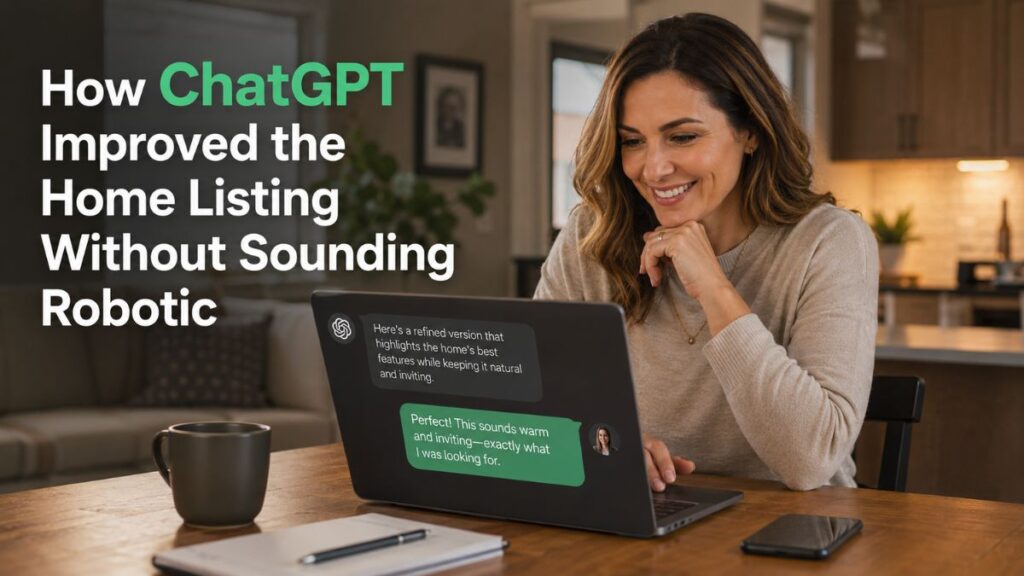
One common worry with AI-written content is that it can sound stiff or repetitive. He ran into this early on too. His first few drafts from ChatGPT sounded a little too polished, almost like a real estate brochure rather than a real person describing their home, with phrases that felt slightly generic despite being technically well written.
To fix this, he did a few simple things:
- He asked ChatGPT to rewrite the listing in a more conversational tone
- He added personal touches, like mentioning morning coffee on the porch
- He removed overly promotional phrases like “once in a lifetime opportunity”
- He read the final version out loud to check if it sounded natural
- He asked a friend to read it and flag anything that sounded fake or exaggerated
This back-and-forth editing process made a huge difference. Instead of one single output, he treated ChatGPT like a writing partner, going through two or three rounds of revisions until the listing sounded like him, just clearer and more engaging. He noticed that the more he treated the process as a conversation, giving feedback like “make this line shorter” or “this part feels too salesy,” the more natural the final version became.
He also discovered a simple trick: asking ChatGPT to write the listing as if explaining the home to a close friend, rather than as if writing for a stranger. This one adjustment removed most of the stiffness from the earlier drafts and made the final listing feel personal and trustworthy, which buyers responded to noticeably better.
Mistakes He Avoided While Selling His Home With AI

Not every AI-assisted listing works well the first time, and this seller learned a few lessons early that helped him avoid common pitfalls that trip up many first-time users of AI writing tools.
Mistakes he made sure to avoid included:
- Copying the AI’s first draft without editing it for accuracy
- Exaggerating features that didn’t actually exist in the home
- Using generic phrases that could describe any house, not his specific one
- Ignoring local details that make a listing stand out, like nearby parks or schools
- Skipping photos and relying on text alone to sell the home
- Letting the AI-generated tone override his own honest description of the property
- Publishing a version without reading it fully from start to finish first
He also made a point of fact-checking every claim ChatGPT generated. AI can sometimes add flattering language that isn’t quite accurate, so he reviewed each sentence to confirm it matched the real home, not an idealized version of it. This mattered not just for honesty, but because buyers who show up and find the property doesn’t match the listing lose trust immediately, which can slow down or completely derail a sale.
Another mistake he avoided was over-relying on ChatGPT for every single piece of communication. While it was useful for the main listing and follow-up messages, he still made time to personally respond to buyer questions in his own words, which helped maintain a genuine connection throughout the process.
Can ChatGPT Help You Attract More Potential Buyers?

Based on this seller’s experience, the answer is yes, but with realistic expectations. ChatGPT didn’t find buyers on its own, and it can’t replace the fundamentals of pricing a home correctly or presenting it well in person. What it did was make the listing itself far more appealing, which led to more clicks, more inquiries, and ultimately more serious buyers walking through the door.
A stronger listing description can help in several ways:
- Better headlines and descriptions increase click-through rates on listing sites
- Emotional, story-driven language helps buyers picture themselves living there
- Clear, well-organized details reduce confusion and unnecessary questions
- SEO-friendly wording helps the listing appear in more online searches
- Consistent tone across platforms builds trust with buyers browsing multiple sites
The key takeaway is that ChatGPT works best as a tool to sharpen your marketing, not as a replacement for real photos, honest pricing, and good communication with potential buyers. In this seller’s case, the improved listing led to noticeably more messages within the first week compared to his original attempt, simply because the description gave people a reason to imagine themselves living there instead of just scanning a list of features.
Best Ways to Use ChatGPT for Real Estate Marketing

If you’re thinking about trying this yourself, there are several practical ways to use ChatGPT throughout the selling process, not just for the main listing description.
Some of the most useful applications include:
- Writing the main property description for listing websites
- Creating shorter versions for social media posts
- Drafting email templates to send to interested buyers
- Writing follow-up messages after a showing
- Brainstorming headlines that grab attention in search results
- Generating a list of talking points for open house day
- Preparing simple, friendly responses to frequently asked buyer questions
- Drafting a short introduction paragraph for use across multiple listing platforms
Using ChatGPT across these different touchpoints, instead of just the listing itself, helped this seller maintain a consistent, professional tone throughout the entire selling process. It also saved him a noticeable amount of time each week, since he wasn’t starting from a blank page every time he needed to communicate with a potential buyer or update his listing for a new platform.
What ChatGPT Can and Cannot Do When Selling a Home

It’s important to set realistic expectations about what AI can actually do in a home sale. ChatGPT is a powerful writing assistant, but it has clear limits, and understanding those limits is part of what made this seller’s experience successful rather than frustrating.
What ChatGPT can do well:
- Write clear, engaging property descriptions
- Suggest catchy headlines and marketing angles
- Help draft buyer communications and follow-ups
- Save time compared to writing everything from scratch
- Offer multiple versions quickly so you can compare and choose the best one
What ChatGPT cannot do:
- Take or edit real photos of the property
- Verify legal documents or handle contracts
- Negotiate directly with buyers
- Guarantee a sale or a specific price
- Replace the judgment of a real estate professional for complex transactions
- Understand local market conditions as well as an experienced local agent would
Understanding this balance is what made the experience work well for this seller. He used ChatGPT for what it’s good at, writing, and relied on his own judgment, or professional help, for everything else, including pricing decisions and reviewing the final sale paperwork with appropriate legal guidance.
Tips for Writing a Home Listing That Gets More Views

Whether or not you use ChatGPT, there are a few core principles that make any home listing perform better online, and this seller applied all of them alongside his AI-assisted writing.
- Lead with the most attractive feature of the home, not generic details
- Use warm, descriptive language instead of dry, factual bullet points
- Keep sentences short and easy to skim on mobile devices
- Include specific numbers, like square footage and bedroom count, early on
- Mention the neighborhood and nearby amenities buyers care about
- Add a simple, clear call to action, like “Schedule a viewing today”
- Pair strong writing with high-quality, well-lit photos
- Avoid overused real estate clichés that buyers tend to skim past
These principles worked for this seller because they focused on what buyers actually care about, not just what sounds impressive to the seller. He noticed that listings which combined strong, specific writing with genuinely good photos consistently performed better than listings that relied heavily on one or the other.
Lessons Every Home Seller Can Learn From This ChatGPT Success Story

This homeowner’s experience offers a simple but valuable lesson: you don’t need a big marketing budget to sell your home well, you need the right approach. ChatGPT gave him access to professional-level writing without the professional-level price tag, and a little editing and personal touch made all the difference between a flat listing and one that actually got attention.
For anyone selling a home in today’s market, the biggest takeaway isn’t that AI replaces effort, it’s that AI can multiply the effort you already put in, if you know how to guide it. The homeowner didn’t simply hand the task over to ChatGPT and walk away. He stayed involved at every step, reviewing, editing, and personalizing the output until it genuinely represented his home and his voice. That combination of AI efficiency and human judgment is really what made the difference between a listing that sat online for weeks and one that generated real interest within days.
Conclusion
This homeowner’s story proves that selling a home doesn’t always require a big budget or a hired marketing expert. With the right prompts and a willingness to edit and personalize the output, ChatGPT helped turn a flat, forgettable listing into one that actually attracted buyers. The lesson here isn’t that AI does all the work. It’s that AI, combined with honesty, local knowledge, and a human touch, can genuinely speed up the selling process. If you’re preparing to list your own home, this approach is worth trying. Start with a detailed prompt, review every claim for accuracy, and refine the wording until it sounds like you. Used the right way, ChatGPT can be one of the smartest, lowest-cost tools in your home-selling toolkit, helping your listing stand out in a crowded market without adding extra cost or stress to an already busy process.
FAQs
Can ChatGPT actually help sell a house faster?
Yes, it can improve listing quality and attract more views, though it doesn’t guarantee a sale.
Do I need writing experience to use ChatGPT for a listing?
No, but reviewing and editing the AI’s output for accuracy still matters.
Is it safe to trust ChatGPT with real estate details?
Yes, as long as you fact-check every detail before publishing the listing.
Can ChatGPT replace a real estate agent?
No, it only helps with writing and marketing, not legal or negotiation tasks.
What should I ask ChatGPT to write a good listing?
Give it specific details about the home, buyer audience, and desired tone.
Does AI-written content sound robotic?
It can, unless you edit it to sound more personal and conversational.
Is using ChatGPT for real estate marketing free?
Yes, basic ChatGPT access is free, making it a low-cost marketing option.